Welcome!
I’m a Senior Lecturer in Public Policy teaching statistics and working on integrating technology and pedagogy. I am increasingly focused on generative AI and learning and creating inclusive classrooms, and do research on both. Sometimes I write about tech and teaching. Take a look around, and please feel free to get in touch.
I’m on sabbatical for the Spring 2026 semester, and have been documenting my thinking around redesigning my course for AI here.
If you’d like to explore my posts more conversationally, I built this chatbot (obligatory IN BETA tag) that has access to everything I’ve written on this blog!
-
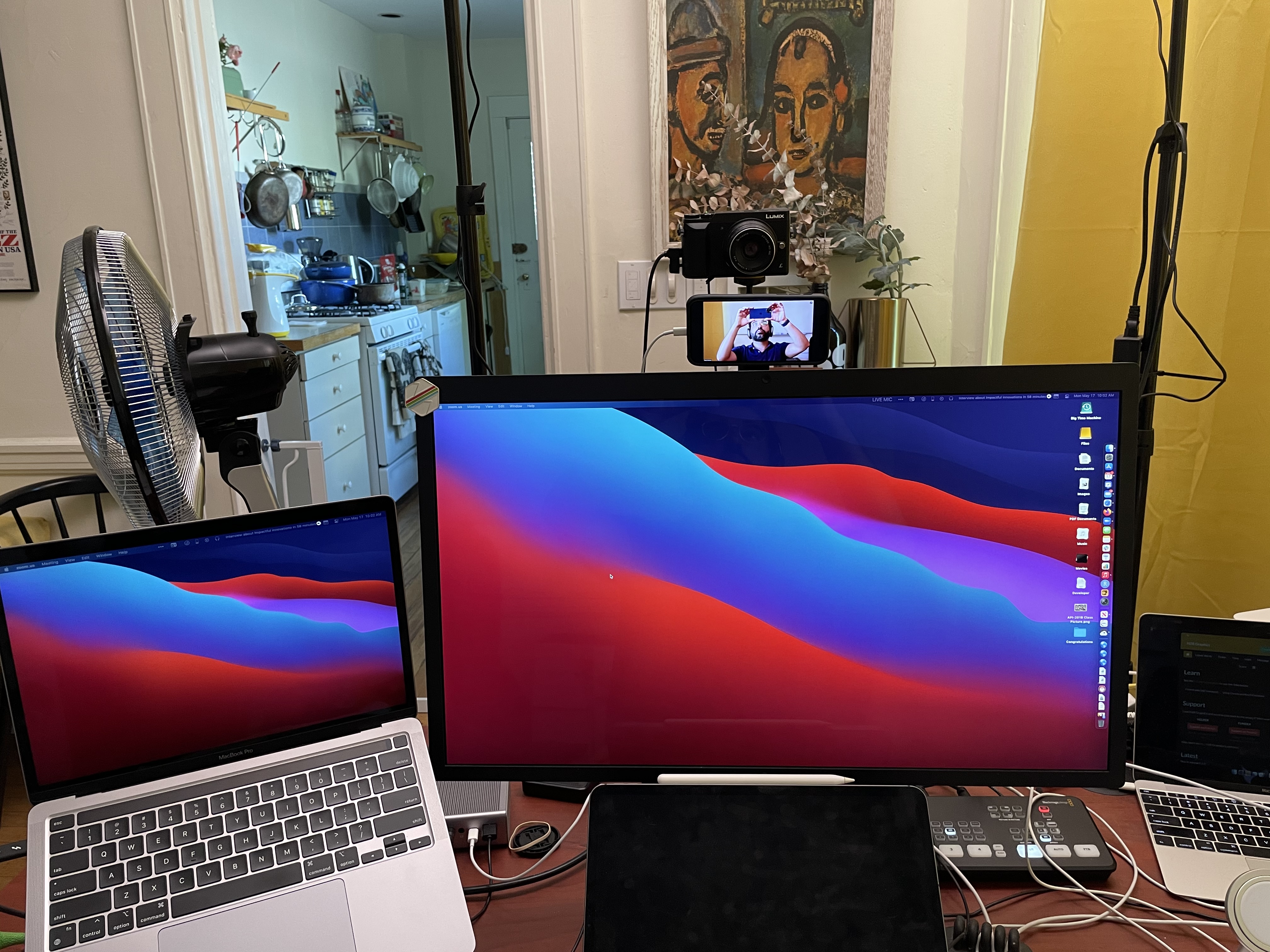
I always have a fantastic time on Mac Power Users, and this time was no different. We talk agentic workflows, vibe coding bespoke apps, and how my setup has evolved over the years. Oh, and we send several bug reports to John Ternus. Continue reading
-
Putting My Teaching Where My Mouth Is
An update on my course redesign for the fall.
Well, my sabbatical is officially over. I’m really grateful for a whole semester to reflect on what it means to teach in 2026 and translate that into concrete suggestions for my own courses. But it’s finally time to put my conclusions into practice! Continue reading -
Notes from a Convening on Teaching Statistics in the Age of Agentic AI
On June 4, I organized a convening of twenty faculty, five PhD students, and two teaching and learning experts at the Kennedy School’s Ash Center to spend a day on the question that I’ve been working on for the past several months: how should we teach statistics and quantitative methods... Continue reading -
Surfing the Vibe Continuum
Reflections after a few months of vibe coding
What follows are reflections on the past several months I’ve spent using agentic AI to help me code along a continuum ranging from code review all the way to full-blown Anthropic-take-the-wheel vibe coding. Some of the things I’ve attempted (in ascending order of coolness): Continue reading -
The New AI Literacy
or, The Agentic Analyst
A hot topic since the advent of commercial LLMs is just how “smart” they are. They’ve been benchmarked (maybe too much) and given standardized tests, all in an effort to create standardized ways of understanding what they’re capable of. A common refrain has been that the initial GPT-4o type models... Continue reading -
Agentic Everything
How the latest set of models changes things.
I have been dancing around this post for the past few weeks. My sabbatical has been well-timed, in that it has coincided with the most significant shift in the capabilities of AI tools since the advent of ChatGPT in 2022. I’m referring here to the power of new agentic AI... Continue reading -
Pray, Mr. Babbage
An exploration of if, and how, to teach AI skills
For those following at home, I spent the end of my last post focused on thinking through the existing skills that I teach in my course. I now want to spend some time thinking about new skills, whether they exist, whether they’re worth teaching, and how they might be taught.... Continue reading -
Jekyll to Substack
I’ve been using Claude Code in a million ways, but one of them is to create tools that I don’t have the knowledge to make myself. Continue reading -
Mapping out my Airport Ideas
An initial attempt at brass tacks
Welcome to week 3 of my redesign! The main AI news of the week is that humans decided that the lesson to be learned from social media in the modern age is that AI agents should do it too. Continue reading -
Skating to an erratic puck
Why transformation needs to be ongoing, and one way of approaching it
As I get the ball rolling on my course redesign, I’ve been reflecting on the feeling of whiplash that many educators (including myself) are experiencing. It goes something like: “I spent so much of 2020-21 redesigning my course for Zoom; do I seriously need to do this again?” What’s worse,... Continue reading -
Course Corrections
Redesigning my course for AI
This post marks the first in a series that I hope to write this year on redesigning my quantitative methods course for a world where generative AI is ubiquitous, incredibly powerful, and potentially dangerous. While there is plenty of thoughtful prose that has been written about generative AI and learning,... Continue reading -
Op-Ed on Google's so-called Homework Help
My colleague Dan Levy and I wrote this piece about the missteps that many AI companies are making when it comes to tools that supposedly help students learn. Continue reading -
All Things Considered segment
Yesterday I was featured on WBUR’s All Things Considered to talk about my current approach to generative AI in the classroom. We talk about the promise of these tools for learning, the very real risks they pose, and what I think AI companies, teachers, and students should do differently. Continue reading -
Tutor Bot study, Practice Problem Generator
I was recently featured on OpenAI’s new ChatGPT for Education Substack, where I discuss a custom bot that I created to help my statistics students practice core skills needed to succeed in my course. Read all about it, and see the full prompt, here. Continue reading -
Keynote is in a rut
Readers of this blog know I have often sung the praises of Apple’s Keynote app as a teaching tool. Its animation capabilities, particularly with Magic Move, allows me to easily make effective visualizations of statistical concepts for my class. Its Keynote Remote feature allows me to control Keynote on my... Continue reading -
Feature @ the Center for International Development
The folks at CID wrote a feature on my work and approach to teaching. You can access it here! Happy to discuss any or all aspects of it. -
Using Google Colab to teach R
I was lucky to be a participant at the TeachECONference, presenting on my use of Google Colab to introduce students to R (with my colleague Sharad Goel). Video below, and sample Colab notebook here! Continue reading -
Guesting on Mac Power Users
Last week I was lucky enough to be invited back to the Mac Power Users podcast for the third time (previous visits here and here). This time we focused heavily on video conferencing for obvious reasons, and I talked about some tips related to Zoom window management, making use of... Continue reading -
Free Options for Sharing Handwritten Student Work
A recurrent problem during my statistics course last semester was that it was difficult for students to share handwritten work, diagrams, and drawings when I sent them into breakout rooms to work on a particular problem. Continue reading -
Teaching Remotely with Slack
As I prepare for my Spring semester, one of my biggest wins from the Fall was my use of Slack as a clearinghouse for discussions, announcements, and questions related to my course. I made this short video summarizing how I used it. Continue reading -
Recommended Student Settings for Zoom
I made a short video illustrating the Zoom settings that I believe are well-suited for my style of teaching. I’m assuming students are using around a 13” laptop without an external monitor. If you think your students would find this useful, please feel free to share! Continue reading -
Putting a timer on your shoulder using an ATEM Mini
-
The Promise and Peril of Virtual Cameras on Zoom
A problem and a potential solution Continue reading -
Playing a Collaborative Playlist on Zoom
-
Teaching from Home: Three Reflections After a Week of Teaching Online
Last week was my first full week of teaching online. Like virtually every other teacher in the world right now, I learned a lot about what works for my course and what does not. There were many realizations that I had about the logistics of my class: for example, I... Continue reading -
Teaching From Home (TFH): Writing on a Tablet
No matter what we teach, many of us make use of handwriting when in the classroom. We write on a whiteboard/blackboard, or write on handouts using a document camera, or write on slides being project on a screen. Writing helps guide learners toward the ideas that you consider important, and... Continue reading -
Teaching from Home (TFH): Hardware
First, to whoever is reading this: I hope this finds you safe, healthy, and (relatively) happy. While this is very far from the first thing on folks’ minds, I’ve received a lot of feedback on my online teaching setup and online teaching strategy, and thought I should share my ongoing... Continue reading -
Producing, Recording, Editing, and Sharing Animated Videos on iPad
A significant part of my pedagogical approach involves the creation of short, animated videos that convey statistical concepts. Students watch these videos and answer a few quiz questions, which I can then use to make better use of the time we have in class together. Continue reading -
iWork gets LaTeX equation editing
In April of last year, Apple released an update for Pages that supported rendering equations entered using LaTeX or MathML. I was really impressed that Apple chose to support not one but two standards for entering equations1, but was pretty bummed to learn that equation rendering was specific to Pages.... Continue reading -
15 Minutes on Two-Stage Exams
I delivered a short presentation on two-stage exams1 at the Harvard Initiative for Teaching and Learning Annual Conference back in September. I’ve talked about these in the past, but this time (a) there’s more of a focus on quantifying collaboration, and (b) there are some neat visuals that I couldn’t... Continue reading -
My Tech Setup in the Classroom
I’ve talked at length about the technological details of my teaching setup, and I frequently get questions about exactly how it works. This post is an attempt to document my current setup1. Before reading on, it’s important to note a few things: I do mean current; it’s constantly in flux... Continue reading -
Collaborative Exams on the Teach Better Podcast
My journey through the world of podcasts continues, this time on the Teach Better Podcast (an excellent podcast that you should check out if you have any interest in pedagogy and higher ed). This one has (almost) no technology in it. Instead we discuss a collaborative exam structure called Two... Continue reading -
Summer Podcasts
This summer I was lucky enough to guest on two podcasts. Continue reading -
Interview: Live Annotation of Student Work with GoodNotes
I was recently interviewed on ABLConnect, a Harvard-based “online database of active learning efforts in post-secondary classrooms.” I talk about my use of GoodNotes to take pictures of student work in class, embed them into a GoodNotes document, and annotate them without skipping a beat. It’s a great tool to... Continue reading -
Mac Power Users #319
This week I was on Mac Power Users to talk about my workflows related to teaching and academic research. I’m a huge fan of MPU so it was quite an honor to be on. Continue reading -
Annotating Screenshots in iOS with Mail
Gabe Weatherhead has an awesome post about how he uses the awesome Pixelmator to annotate screenshots. It’s awesome. Continue reading -
In Praise of GoodNotes
Note: I have no affiliation whatsoever with the developers of GoodNotes, nor do I receive any compensation from them. I just really, really like their app. Continue reading -
A Good Day to Keynote Hard
Keynote on iOS got an update yesterday, with a zillion improvements, the biggest of which are multitasking and Bluetooth keyboard support. These are features that are being added to lots of iOS 9 apps, but on Keynote they enable three fantastic use cases during presentations. Continue reading -
Showing Context with Magic Move
I use Keynote for all of my presentations. It’s a hassle to have to run them off of my own devices instead of using a venue’s PC (though it’s getting easier), but it’s worth it for one reason: making animations is incredibly easy in Keynote. Continue reading -
Interviewed by Noteshelf
I was interviewed by the makers of Noteshelf, one of the first (of many) handwriting apps that I bought on the iPad. Though I’ve since switched to GoodNotes for its more advanced features, Noteshelf is the app that has come closest to emulating an actual notebook and pen in my... Continue reading -
Save files on iOS with Workflow
I like getting work done on my iPhone and iPad. At times it gets impractical (I’m looking at you Stata), but there are lots of simple actions that I can do from my iOS devices, oftentimes faster than I can do on my Mac. One task that I always thought... Continue reading -
How I will write my dissertation
In the spirit of getting my procrastinating done during the holidays (that’s how procrastinating works, right?), I thought I’d share how I choose to write complex papers. For my purposes, “complex” means any paper that involves some combination of: Continue reading -
Contradictions of the MPH
But the more time I spent as a student of public health, the more my worries of impracticality gave way to a funny feeling of being left out. Our professors were trained as statisticians, economists, and sociologists; what was I being trained as? Was public health a discipline? An area... Continue reading -
Increasingly Irrelevant Distinctions
When I started graduate school a few years ago, I was terribly concerned about my notetaking setup (in retrospect, I should have been more concerned about statistics). I was about to get hammered by information that took a variety of forms: lots of equations and diagrams, but also enough discussion-oriented... Continue reading -
On Rigor 2
This is a followup to my previous post on external validity and rigor, and a further attempt to pretend that this blog is not just about productivity, apps, and hacks. Continue reading -
Wireless Presenting Just Got a Lot Easier
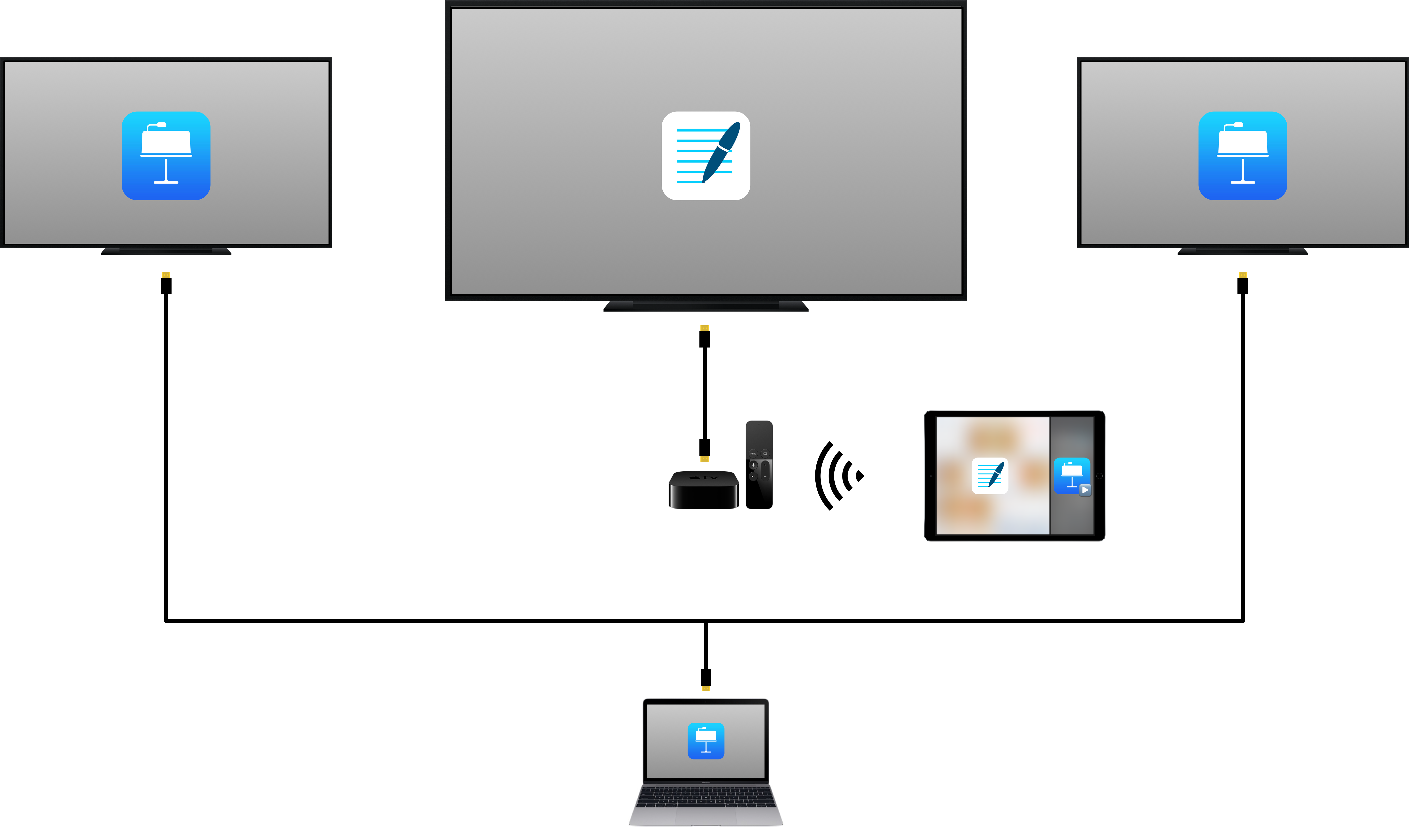
Much has been said about Apple’s updates to Keynote, Pages, and Numbers last year, and much of that has been pretty negative. However, Apple has been rolling out updates to these apps over the past few months and, as of the latest update, has made a wonderful thing possible: it... Continue reading -
MOOC Money
Caroline M. Hoxby recently published a NBER working paper on the role of MOOCs in the future business models of both “selective” and “non-selective” postsecondary institutions. The bulk of the paper would be interesting only to an economist, but the end is where things get interesting. Continue reading -
On Rigor
Lant Pritchett wrote a piece for the Building State Capacity blog about the notion of “rigorous evidence.” At the risk of putting words in his mouth, my sense is that his argument boils down to this: promoters of evidence-based policy overplay their hands by focusing exclusively on internal validity1. He... Continue reading -
EZ does it
While discussing research workflows with colleagues, I’ve been surprised to hear that many get the full text of a journal article by coming across an article, navigating to their school library website, searching for the journal under E-Resources, clicking on the journal link, digging down to the article of interest,... Continue reading -
Teaching Regression Discontinuity
A very enjoyable post on the regression discontinuity study design over at the must-read Development Impact blog. I was lucky enough to introduce this design to a room full of policy master’s students this semester, and I agree completely with all of Evans’ points. In addition to being a conceptually... Continue reading